Intellectual property (IP) refers to creations of the mind: inventions, literary and artistic works, and symbols, names, images, and designs used in commerce. Intellectual property rights are like any other property right. They allow creators, or owners, of patents, trademarks or copyrighted works to benefit from their own work or investment in a creation. Due to more advanced technology being introduced since the 20th century, the IP rights system has been noticed alot more and used more commonly.
Copyright
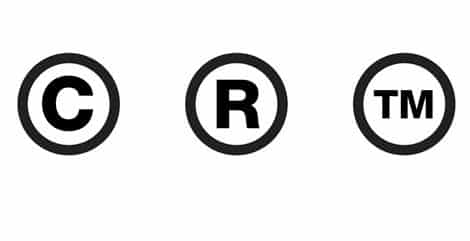
Copyright law originated in the United Kingdom from a concept of common law; the Statute of Anne 1709. It became statutory with the passing of the Copyright Act 1911. The law gives the creators of literary, dramatic, musical, artistic works, sound recordings, broadcasts, films and typographical arrangement of published editions, rights to control the ways in which their material may be used. The rights cover; broadcast and public performance, copying, adapting, issuing, renting and lending copies to the public. In many cases, the creator will also have the right to be identified as the author and to object to distortions of his work. International conventions give protection in most countries, subject to national laws.
Trademark
A trademark is a sign which identifies the products or services of a business that may consist of words, slogans, logos, shapes, numerals, colours or any combination of these. It is basically a sign of origin that allows customers and other companies to distinguish the goods or services of one trader from those of another. They are usually distinctive for the goods or services in relation to what it is and are never similar or identical to any other earlier marks by another company. Use of another traders trade mark may end up infringing some third party rights which could mean litigation, re-branding or even withdrawal from the market.

Patent
A patent is used to protect new inventions and covers how things work, what they do, how they do it, what they are made of and how they are made. It gives the owner the right to prevent others from making, using, importing or selling the invention without permission. To get a patent on an invention, the invention must be new and not been done before by someone else and must be capable and feasible of being made or used in some kind of industry
Registered Design
An industrial design right is an intellectual property right that protects the visual design of objects that are not purely utilitarian. An industrial design consists of the creation of a shape, configuration or composition of pattern or color, or combination of pattern and color in three dimensional form containing aesthetic value.If you do not apply for a registered design, your creations may still receive limited protection through unregistered Design Right or copyright: However, there are some limitations to what may be protected: You can only stop people using your design if you can prove it was intentionally copied so Design Right is difficult to enforce. You can only protect the three-dimensional shape. Two dimensional designs may be protected by copyright but this is more difficult to enforce than a Registered Design. Protection only lasts for a maximum of 15 years and is subject to a Licence of Right for the last 5 years
Bibliography

No comments:
Post a Comment